Zero waste
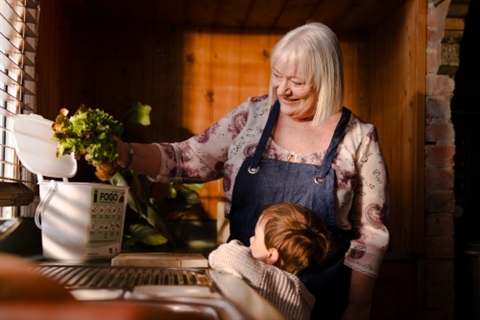
Carol was amazed to hear a head of lettuce takes just a few weeks to decompose in her green FOGO bin, but when it goes to landfill it can take years, releasing harmful methane gas and creating climate pollution.
Using her kitchen caddy and green bin has made her more conscious of her food waste and more creative with her veggie scraps.
This keeps our community cleaner and healthier, and Carol's bins smell better. Plus, she's the newly crowned queen of compost which is great for her garden.
So when you're throwing out your next lettuce, think about where it's heading.
What's the challenge?
Keeping food scraps, garden waste and other organic materials out of landfill matters.
When organics rot in landfill, they break down and release methane, a powerful climate pollutant that heats the planet much faster than carbon dioxide.

Why make a change?
Healthier gardens and communities.
Food waste makes up almost half (45 per cent) of all organic waste to landfill in Tasmania. That's a waste of valuable nutrients, time and money. When food and garden waste go to landfill, they take up space and produce methane, a powerful climate pollutant.
Organic waste is full of nutrients that can be returned to the soil to grow more plants and veggies. Keeping it out of landfill also reduces disposal costs.
The good news is there are simple solutions. Putting food scraps in your FOGO bin turns waste into compost that feeds the soil. Or, if you have a garden, you can make nutrient rich compost at home.
Take action
Put your food scraps in your green bin
Your green bin and kitchen caddy is also known as your FOGO (Food Organics and Garden Organics) bins.
They're for disposing of any organic waste such as:
- kitchen scraps, including meats, bones, dairy, egg shells, and veggies
- lawn clippings
- weeds
- fallen leaves
- small tree branches
- cat litter
- soiled paper and cardboard.
Consider composting
Or, if you have a garden, you can make nutrient rich compost at home.
Turning food scraps and garden waste into compost reduces waste sent to landfill and creates a nutrient-rich soil improver for your garden.
It's a simple way to grow healthier plants while reducing emissions.
Grow food for yourself or with your community
Veggie gardens are not only fun but are a great climate action in their own right.
It can also help reduce emissions by cutting the distance food travels from farm to plate.
Grow your own or buy local when you can.
Community gardens
Community gardens are a great way to get involved if you don't have the space for a veggie garden at home.
Not only is this a great way to grow your own produce, but it's also a fantastic way to meet and be a part of your local community.
Sign up to FOGO
If you're a Hobart resident, you can register to get a residential FOGO bin service at your home. Fill out the online form:
Register for FOGO
Please note that more information about FOGO bin collection and fees can be found on the City of Hobart bin requests and enquiries page.
Learn more
City of Hobart - Waste and recycling
Rethink Waste Tasmania
OzHarvest
Climate leaders